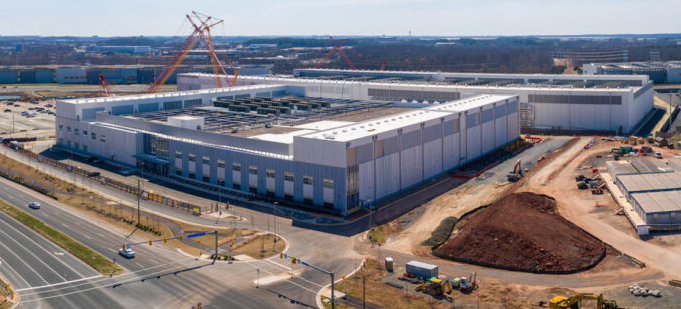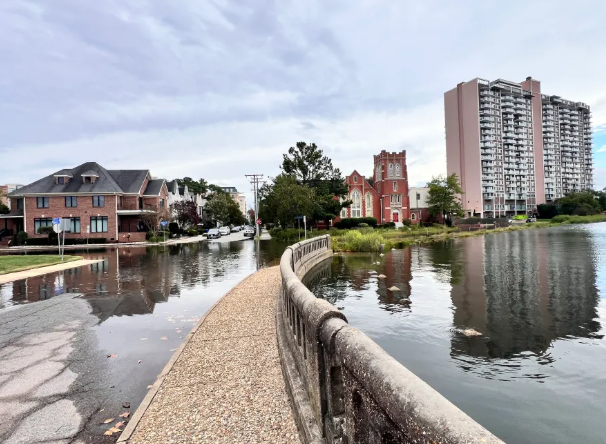

For most of the past decade, data centers have been a Northern Virginia story. Loudoun County’s “Data Center Alley” became the default comparable set for anyone trying to value this asset class, and Hampton Roads was, at most, a footnote. That is changing. Two transatlantic subsea cables, MAREA and BRUSA, land in Virginia Beach, and the colocation and cable-landing infrastructure built around them has started pulling real data center investment into the region. But the same month that investment is accelerating, three Hampton Roads localities have moved to restrict, pause, or eliminate the very use that investment depends on. For an asset class whose value already turns on an unusually narrow set of variables, that regulatory whiplash is not a zoning footnote. It is a valuation problem.
What’s Happening With Data Centers in Hampton Roads Right Now?
The pushback arrived fast, and it arrived from more than one city at once. In June, Virginia Beach’s City Council unanimously directed staff to draft an ordinance barring traditional and hyperscale data centers citywide, with Mayor Bobby Dyer calling large facilities “not good neighbors.” By August, the council had gone further, imposing a 12-month moratorium on new data center permits while that ordinance gets written. Chesapeake moved on a similar timeline: after rejecting a proposed 350,000-square-foot facility near the Etheridge Lakes neighborhood in 2025, the city paused new applications in July and then, on August 18, 2026, formally stripped data centers of by-right status, according to Virginia Business. They are now limited to industrial zoning districts, require a conditional use permit, and are barred from connecting to groundwater. Suffolk is drafting language to prohibit data centers outright while it writes longer-term rules, with broader regulations expected sometime in 2027. Norfolk, Newport News, Portsmouth, and Hampton have no facilities and no formal restrictions yet, though Newport News has already signaled it will not accommodate a hyperscale project and Hampton is touring existing facilities in Henrico County as it studies the question.
None of this has stopped the deals already in motion. On August 17, 2026, the same month Virginia Beach’s moratorium took effect, the city’s own Development Authority agreed to sell nine acres in Corporate Landing Business Park to Globalinx Data Centers for a new colocation facility tied to the cable landing station there. Globalinx had already received an $800,000 city grant in May to fund a $34.5 million expansion adding capacity for four more subsea cables, per WHRO. In other words, the region is simultaneously closing the door on new hyperscale and traditional data centers and actively courting the colocation and cable-landing niche it sees as a better fit. That distinction, between the data center use a locality still wants and the one it just restricted, is exactly the kind of nuance that gets lost in a quick zoning lookup and matters enormously in an appraisal.
Why Is This a Different Kind of Real Estate Asset to Begin With?
Even before this year’s zoning changes, data centers were already forcing a rethink of how appraisers approach valuation. The conventional view treats a data center like specialized industrial real estate: value it on rentable square footage, tenant credit, and lease terms, the same framework used for a warehouse. Industry analysts increasingly argue that framework understates the real driver of value. As a CBIZ analysis put it, data centers are power-constrained, not space-constrained; revenue depends on installed capacity in megawatts, utilization, and price per kilowatt, not square footage or occupancy alone, and interconnection and substation capacity, not available land, are now the more common bottleneck on new supply. Density matters too: a facility built for 12 to 15 kilowatts per rack generates materially more income than one built for 5 to 8 kilowatts per rack even on identical capacity, which means a facility’s age tells an appraiser far less about its competitiveness than whether its electrical and cooling infrastructure can support current tenant demands. That is a form of functional obsolescence that has nothing to do with the roof or the foundation.
That shift is also reshaping which approach to value gets the most weight. One industry analysis from Berkeley Research Group notes that as hyperscalers increasingly develop and occupy their own facilities rather than leasing from a third-party owner, the traditional income approach, built around a stabilized rent roll, becomes harder to apply, and valuation is leaning more heavily on the cost approach: what it actually costs to build and equip a facility at scale. That cost has not been standing still. The same analysis puts all-in construction costs at roughly $7.7 million per megawatt in 2020, climbing to about $10.7 million per megawatt by 2025. Cap rates for the asset class have also been compressing for the strongest deals: reported figures for stabilized single-tenant hyperscale facilities on long leases to investment-grade tenants run from roughly 5.5% to 6.5%, with wholesale and multi-tenant colocation, the category most relevant to what Hampton Roads is actually attracting, trading closer to 6% to 7%. At those levels, a 100-basis-point swing in cap rate moves value by 15% to 20%, which is exactly the kind of sensitivity that makes getting the zoning and entitlement picture right before a valuation is finalized so important.
How Does This Change Highest and Best Use Analysis Here?
Highest and best use has always rested on four tests: legally permissible, physically possible, financially feasible, and maximally productive. Chesapeake’s removal of by-right status and Virginia Beach’s moratorium both hit the first test directly. A parcel in an industrial district that could have supported a data center by right in May 2026 may now require a conditional use permit that is neither guaranteed nor timed, or may be barred from the use entirely until a new ordinance is adopted, however that ordinance ultimately treats the site. That is a materially different legal landscape than existed for the same parcel a year ago, and it means an appraiser cannot simply point to existing industrial zoning and existing data center activity nearby as evidence that a data center use remains legally permissible on a given site today. The Globalinx transaction is the clearest illustration of why this requires case-by-case diligence rather than a citywide assumption in either direction: Virginia Beach’s moratorium is aimed at large-scale and hyperscale facilities, but the city is still actively facilitating colocation development tied to its cable landing infrastructure, including a land sale that closed after the moratorium was already in effect. A parcel’s proximity to Corporate Landing Business Park’s cable landing station, specifically, may carry a very different highest and best use conclusion than an otherwise similar industrial parcel elsewhere in the city with no such connectivity.
What Does This Mean for Owners, Lenders, and Appraisers in the Region?
For owners of industrial and flex land near the Virginia Beach cable landing corridor, or in any Hampton Roads jurisdiction now rewriting its rules, this is a live entitlement question that belongs in any current valuation, not a detail to revisit at the next zoning update. A site’s value as a potential data center development, if that potential existed in an appraisal six months ago, may need to be reassessed against the specific, current rules in that specific jurisdiction, because “data centers are restricted in Hampton Roads” and “data centers are restricted on this parcel” are not the same statement, and conflating them in either direction risks a defensible value conclusion. Lenders underwriting acquisition or construction financing in these corridors face the same issue from the other side: a feasibility study or appraisal that assumed by-right approval in Chesapeake before August 18, or assumed no further restriction in Virginia Beach before this year’s moratorium, is already out of date. This also layers onto a point we have made in recent weeks about rate-driven cap rate pressure and CMBS refinancing stress across the region: a use with genuinely compelling fundamentals, strong tenant demand, compressing cap rates nationally, rising rents, can still see its local value undermined if the entitlement path to deliver that use is no longer clear.
If you own or are underwriting land in an industrial corridor anywhere near Hampton Roads’ cable landing infrastructure, or in Chesapeake, Suffolk, or Virginia Beach specifically, the first step is confirming current zoning status directly with the locality rather than relying on how the parcel was classified even a few months ago; these rules are changing quarter to quarter right now, and an outdated assumption in either direction, too restrictive or too permissive, can distort a valuation. If a data center use is part of your property’s investment thesis, that thesis now depends on a conditional use permit process whose outcome and timeline are not guaranteed, and that uncertainty itself belongs in a feasibility analysis, not just the eventual answer. And if you are weighing a sale, a refinance, or a tax appeal on a property where data center potential factors into value, an appraisal that reflects the specific entitlement status of your specific parcel today, not the general narrative about data centers in Hampton Roads, is what will hold up with a lender, a buyer, or an assessor. Given how quickly this landscape has moved in 2026, a property that has not been reviewed against current local rules in the last few months is at real risk of carrying a stale assumption into its next transaction.